Kardashian: Kanye di gjithçka për mua

Kanye West njeh gjithçka rreth Kim Kardashian, të paktën sipas vetë vajzës së famshme të “reality show” në SHBA..

Zbulohet lidhja e këngëtares Ronela Hajati dhe Metit të BB5

Besojme se edhe ju e dini që këngëtarja Ronela Hajati së fundmi është duke e bërë shumë shpesh rrugën Tiranë- Prishtinë.

Bes Kallaku (Gjini Portokallis): Tërbohet në Londër (Foto)

Aktori i “Portokallisë”, Bes Kallaku i njohur si Gjini i Portokallisë, është fotografuar në Londër, ku ka qenë i pranishëm me një sërë artistësh të tjerë të njohur të skenës shqiptare.

Jeta Faqolli: Do të doja një të dashur menaxher

Me një zë karakteristik duket se ka tërhequr vëmendjen e shumë fansave, megjithëse pretendon ende shumë nga vetja.

Gerta dhe Liami lidhje intime pas daljes nga Big Brother 5?!

Brenda shtëpisë së Big Brother 5, ata të dy nuk kanë pasur ndonjë raport intim. Megjithatë kanë qenë pjesë e të njëjtës aleancë.

Showing posts with label WORLD NEWS. Show all posts

Saturday, 26 May 2012

Syria crisis: Houla child massacre confirmed by UN

UN mission head Maj-Gen Mood: "Deaths were an unacceptable attack" Amateur footage contained within this clip purportedly shows a mass burial

UN observers have counted at least 90 bodies, including 32 children, after a Syrian government attack on a town. 

UN mission head Maj-Gen Robert Mood told the BBC the killing in Houla was "indiscriminate and unforgivable".
UK Foreign Secretary William Hague said he would seek a strong global response to the "appalling crime". UN chief Ban Ki-moon said it was a "flagrant violation of international law".
Syria's government has blamed the deaths on "armed terrorist gangs".
This is one of the bloodiest attacks in one area since the uprising against President Bashar al-Assad began in March 2011.
Activists say some of the victims died by shelling, while others were summarily executed, or butchered by the regime militia known as the "shabiha".
UN-Arab League peace envoy Kofi Annan, and the Arab League have also condemned Friday's assault.

Map 
 
France's Foreign Minister Laurent Fabius said he was making immediate arrangements for a Paris meeting of the Friends of Syria group, which includes Western and Arab nations, but not Russia or China, who have blocked previous attempts to introduce UN sanctions.
Fighting in Syria has continued despite the deployment of some 250 UN observers monitoring a ceasefire brokered by Mr Annan - a ceasefire which the BBC's Jim Muir in neighbouring Lebanon says is now "pretty fictional".
The UN says at least 10,000 have been killed since the protests began.

UN 'refused to come

A joint statement from Mr Ban and Mr Annan said firing heavy weapons into a residential neighbourhood was a "flagrant violation of international law" which must stop and those responsible should be held to account.

Mr Annan would be contacting Syria's government to "convey in the clearest terms the expectations of the international community, and he will also do so during his forthcoming visit to Syria", it said.
Mr Hague said he would be calling for an urgent session of the UN Security Council in the coming days.
Arab League head Nabil al-Arabi called the assault a "horrific crime" and urged the Security Council to "stop the escalation of killing and violence by armed gangs and government military forces," the Reuters news agency reports.
The opposition Free Syrian Army says it can no longer commit to the ceasefire unless the Security Council can ensure that civilians are protected, the AFP news agency reports.
Horrific video footage has emerged from Houla of dozens of dead children, covered in blood, their arms and legs strewn over one another. It is unverified, but our correspondent says such images would be difficult to fake.
International media cannot report freely in Syria and it is impossible to verify reports of violence.
A team of UN observers visited the town on Saturday and afterwards Maj-Gen Mood said they could confirm "the use of small arms, machine gun[s], artillery and tanks."
But he did not say who was behind the killings.
Our correspondent says local people are angry that the observers failed to intervene to stop the killing.
Abu Emad, speaking from Houla, said their appeals to the monitors failed to produce action.
"We told them at night, we called seven of them. We told them the massacre is being committed right now at Houla by the mercenaries of this regime and they just refused to come and stop the massacre."
The opposition Syrian National Council (SNC) said more than 110 people died. The SNC's Ausama Monajed told the BBC the regime was selecting vulnerable towns to "teach the entire country a lesson".
"It is beyond humanity what we have seen," he said.

UK Foreign Office Minister Alistair Burt says the massacre was "an act of pure, naked savagery"

Activists called a day of mourning on Saturday.
Earlier, in a letter to the Security Council, Mr Ban said the Syrian opposition controlled "significant parts of some cities".
He said that "established terrorist groups" could have been behind some of the recent bomb blasts in Syria judging from the sophistication of the attacks.
He said the situation remained "extremely serious" and urged states not to arm either side in the conflict.
Earlier this month, a bombing in Damascus left 55 dead in an attack which the government blamed on al-Qaeda. The attack came amid mounting fears that the terrorist group was taking advantage of the conflict to gain a foothold.
On Thursday, a UN-mandated panel said Syrian security forces were to blame for most abuses in the conflict, which has continued despite the presence of the UN observers.
Mr Annan's six-point peace agreement ordered a cessation of violence on 12 April. While casualties appeared to fall after the truce, the fighting quickly resumed to previous levels.
Are you in Syria? Do you have friends or family there? Send us your comments and experiences using the form below. At no time should you endanger yourself or others or take any unnecessary risks.


Tuesday, 22 May 2012

N Korea vows to boost nuclear 'deterrent' amid US pressure

North Korea has warned that it will bolster its nuclear programme and take unspecified counter-measures unless the US eases diplomatic pressure on it.

This April 18, 2012 satellite image provided by GeoEye appears to show a train of mining carts, at the lower center of the frame, and other preparations underway at North Korea's Punggye-ri nuclear test site  
Experts have spotted what they say is heightened activity at Punggye-ri nuclear test site
 
The Foreign Ministry accused the US of persisting in "moves to ratchet up sanctions", state media reported.
Last week world leaders condemned the North's failed rocket launch last month and warned that more nuclear tests or launches would bring tougher sanctions.
Satellite images show activity at the North's nuclear test site, experts say.
"Images taken by DigitalGlobe and GeoEye in the past month show mining carts and excavation equipment present at the active tunneling site, yielding the largest amount of spoil - or debris recovered from inside the tunnel - around the tunnel entrance to date," James Hardy of Jane's Defence Weekly told South Korea's Yonhap News Agency.
He said a 9 May DigitalGlobe image showed new road networks within the spoil piles at the Punggye-ri nuclear test site in North Korea's north-east, as well as "carts and a vehicle in the site operations facility".

'Self-defence'

File photo: North Korea rocket  
North Korea tried to launch a rocket last month but failed to do so
 
In a statement on Tuesday, North Korea said it would "continue to legitimately" push for its right "to launch satellites".
"We had access to nuclear deterrence for self-defence because of the hostile policy of the US to stifle the DPRK by force and we will expand and bolster it non-stop as long as this hostile policy goes on," the spokesman said, state news agency KCNA reported.
"If the US persists in its moves to ratchet up sanctions and pressure upon us despite our peace-loving efforts, we will be left with no option but to take counter-measures for self-defence."
The statement comes amid increased tension in the region after the North's long-range rocket launch last month.
The launch came shortly after Washington and Pyongyang agreed on a deal to swap food aid for a moratorium on nuclear and ballistic missile activities.
Glyn Davies, US special envoy for North Korea policy, said on Monday that any nuclear test from North Korea would be "a serious miscalculation".
Speaking after talks with Japanese and South Korean officials in Seoul, he said that any such test would lead to a "swift and sure response" from the region.
 

Sunday, 20 May 2012

Sri Lanka president to free General Sarath Fonseka

Sri Lanka's President Mahinda Rajapakse has ordered the release of the jailed former army chief, Sarath Fonseka. 

Sri Lankan commandos march during a rehearsal ahead of the War Victory parade in Colombo May 17, 2012.  
Thousands of members of the armed forces took part in a parade to mark their victory over Tamil rebels
 
A presidential spokesman told the BBC he would be freed on Monday after formalities were completed.
Mr Fonseka was arrested two years ago after standing against Mr Rajapakse for the presidency.
The former head of the Sri Lankan military was widely credited with the 2009 victory over the Tamil Tigers.
Sri Lanka has been marking the three-year anniversary of the end of the 26-year civil war this weekend, and held a large military parade in the capital, Colombo, on Saturday.
Mr Fonseka was jailed for corruption in 2010.
A parliamentarian and aide to Mr Fonseka, Tiran Alles, told the BBC that he was likely to walk free on Monday, which is also the day that doctors say he can be discharged from the hospital.
Mr Fonseka has been receiving treatment for a respiratory problem.
Banned memorials Sri Lanka's foreign minister is currently in Washington and has been meeting US Secretary of State Hillary Clinton to try and fend off allegations of war crimes.
The BBC's Charles Haviland in Colombo says that although the US calls Mr Fonseka a political prisoner, once he is free he could find himself scrutinised just as much on human rights issues as the country's political leaders with whom he fell out dramatically.
On Friday, a leader of the university students' union in the Tamil-dominated town of Jaffna was beaten with iron bars as he attended a memorial event for the thousands of civilians believed to have died in the final months of the war.
In the past, the government has banned several similar memorials.
And R Sampanthan, leader of the main Tamil party, said the "triumphalism" over the war should end.
"The LTTE [Tamil Tigers] has been defeated. That is the reality that everybody knows. And celebrating a military victory year after year is not going to be helpful from the point of view of reconciliation," he said.
Sri Lanka's civil war began in the 1980s, with Tamils pressing for self-rule against a backdrop of an increasingly assertive Sinhalese nationalism.
Most of the fighting took place in the Tamil-dominated north, but the Tamil Tigers, or LTTE, also carried out suicide bombings in Colombo in the 1990s.
The violence killed up to 100,000 people over several decades, with accusations that both sides in the conflict committed war crimes against civilians.
 

Obama: Eurozone 'must focus on jobs and growth

President Obama: "All the leaders here today agreed growth and jobs must be our top priority"

US President Barack Obama has said there is an "emerging consensus" that European countries must now focus on jobs and growth.
Speaking after the G8 summit of some of the world's leading economies, he said the US was confident that Europe can meet its challenges.
President Obama said leaders had made good progress on a range of issues.
In addition the eurozone crisis, they discussed Iran, Afghanistan and global energy supply.
The leaders of France, Germany, the US, the UK, Italy, Japan, Canada and Russia met at Camp David in the US state of Maryland.
G8 leaders at Camp David (19 May)  
Obama said the meeting had been a success
 
In an earlier communique, G8 leaders committed themselves to promoting growth alongside fiscal responsibility and affirmed that they wanted Greece to stay in the eurozone.
The BBC's Paul Adams at Camp David says both that communique and Mr Obama's speech showed the US and French position had won out over Germany and Britain's pro-austerity stance.
Energy worries Leaders attending the summit addressed a number of issues, including energy security, climate change and the situation in Iran, Afghanistan and North Korea.
There was discussion of a broad release of national oil reserves to steady shaky energy markets when tough new sanctions on Iran's oil exports kick in.
President Obama also announced that they had formed a new alliance to focus on food security with African leaders and the private sector.
The focus, however, remained on the crisis in the eurozone.
Speaking to reporters at the end of the summit, President Obama said: "As all of the leaders here today agree, growth and jobs must be our top priority."
Emphasising that the United States had taken this approach to its own financial crisis, he said he was "confident" that European countries were moving in the right direction.

But he acknowledged that the European situation was "more complicated" than America's. Earlier, the G8 leaders said "the right measures are not the same for each of us".
In a statement, the group said it agreed "on the importance of a strong and cohesive eurozone for global stability and recovery, and we affirm our interest in Greece remaining in the eurozone while respecting its commitments".
The global economic recovery was showing signs of progress, they said, but "significant headwinds persist".
For its part, the EU welcomed the G8 communique with its dual emphasis on boosting growth and jobs.
European Commission President Jose Manuel Barroso and European Council President Herman Van Rompuy said both growth-boosting measures and efforts to restore public finance were needed.
"Opposing the two is a false debate," said they said in a joint statement.
Leaders will now turn their thoughts to Afghanistan, as President Obama and other heads of government travel to Chicago for a Nato summit on Sunday.

Thursday, 17 May 2012

George Zimmerman was 'bleeding from the nose and head'

A Florida neighbourhood watch volunteer who shot an unarmed black teenager had a bloody nose and a cut on his head, according to police reports.

                              A police photo of George Zimmerman after he shot Trayvon Martin

The documents were released to defence lawyers for George Zimmerman, who is accused of second-degree murder over the 26 February killing in Sanford.
The evidence includes an autopsy that found traces of cannabis in Trayvon Martin, who died in the confrontation.
Mr Zimmerman, 28, maintains he shot the 17-year-old in self-defence.
Police found Trayvon Martin face down in the grass with a single gunshot wound to the chest and tried to revive him, according to the police reports.

Several officers who arrived at the scene said that Mr Zimmerman's back was wet and his face swollen.

Officer Timothy Smith said: "I could observe that [Mr Zimmerman's] back appeared to be wet and he was covered in grass, as if he had been laying on his back on the ground. Zimmerman was also bleeding from the nose and the back of the head."
Another officer, Jonathan Mead, said in his report that the neighbourhood watchman "appeared to have a broken and bloody nose and swelling of his face".

 The documents include photos showing what seems to be a bleeding wound on Mr Zimmerman's head

Another officer, Jonathan Mead, said in his report that the neighbourhood watchman "appeared to have a broken and bloody nose and swelling of his face".
The report includes a number of witness statements, including one from a resident who said she saw two men chasing each other, followed by a fistfight. Then she heard a gunshot.
Another resident told police he saw "the black male mounted on the white or Hispanic male and throwing punches 'MMA (mixed martial arts style)'".
The resident said he shouted to the struggling pair that he was going to call the police, before he heard the "pop" of a gunshot.
Another resident is quoted by police as saying: "I opened door and saw a guy on the ground getting hit by another man on top of him… (guy getting hit on ground [Zimmerman] was wearing red calling out for help)".
The report said Mr Zimmerman had previously called police several times to report "suspicious persons, all young black males" in the neighbourhood.
It noted that the encounter which led to the death of Trayvon Martin would have been "ultimately avoidable" if the neighbourhood watch volunteer had remained in his car and waited for police to arrive.
The report also confirms previous media reports that Trayvon Martin was visiting Sanford because he had been suspended from his Miami high school for cannabis possession.

Niger malnutrition crisis spreading - Save the Children

Months of warnings have failed to prevent a serious malnutrition crisis in Niger, Save the Children has said.

                 A rising number of children now need medical treatment in Niger, the charity warns

The charity says more than six million people are affected there, and about 18 million in the Sahel region.
It says a rising number of children now need medical treatment for the condition, as the crisis is reaching a new level of seriousness.
Save the Children's warning comes as this weekend's G8 meeting is expected to discuss food security.
The charity says it is now moving to an emergency response.
Alarm bells have been ringing about Niger - with its record of severe food crises - since late last year after erratic rainfall threatened crop shortages and food prices also soared, the BBC's Mike Wooldridge says.
Aid organisations have been trying to mitigate the impact.
Overall, 25% of the world's children are suffering from chronic malnutrition - over and above the current food emergencies in Africa, Save the Children says.
It has expressed its concern that G8 leaders will shy away from making bold commitments to ensure not only that children have enough to eat, but also the right kind of food and nutrition.


Sunday, 13 May 2012

Occupy Tents Pitched Outside Bank Of England

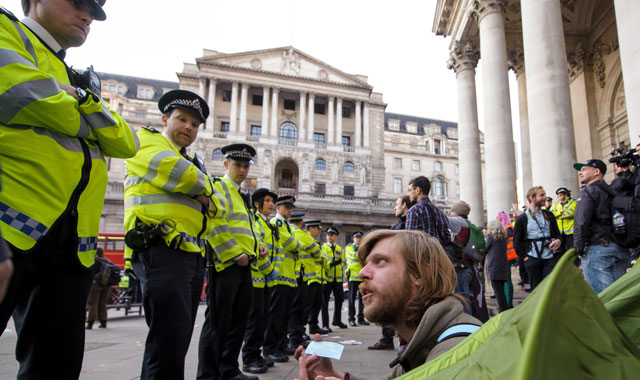
    An Occupy demonstrator inside a tent speaks to police officers outside the Bank of England

Eleven people have been arrested after anti-capitalism protesters from the Occupy movement pitched tents outside the Bank of England.

They have been given a deadline to leave the site and are currently considering whether to defy the police orders.
The protest by some 300 demonstrators in the City of London with banners saying "Bank of England is the St Paul's of Money" and "A Line of Tents Guards Our Future" started with a rally yards away from the Stock Exchange near St Paul's Cathedral.

The eviction of a camp earlier this year from outside St Paul's Cathedral

It was from outside St Paul's where a camp of protesters was evicted by bailiffs in February after living in tents for more than four months.
The march - as part of a global day of action - was aimed at targeting the offices of some of the largest banking institutions in the financial heart of the capital such as Goldman Sachs, Merrill Lynch, RBS and Santander.
Occupy said they have planned another protest for this Tuesday, which will target the British Bankers' Association.
Occupy London supporter David Lincoln said: "The Bank of England stands right at the intersection of finance and government.
"In the light of Bank governor Mervyn King's recent comments about 'vested interests' standing in the way of reform of the financial sector, it is clear that that balance in the UK is fundamentally skewed.
"Hundreds of people gathering by the Bank of England is a powerful symbol of how things have to change."
There were a number of minor skirmishes as police attempted to contain the crowds.
Occupy claimed some police officers used "unreasonable force, including batons being drawn", but a police spokesman said "a proportionate response" was in place.

Afghan peace negotiator Arsala Rahmani shot dead

A senior Afghan peace negotiator has been shot dead in Kabul, officials say.

 Arsala Rahmani was responsible for the committee that looked at freeing Taliban prisoners


Arsala Rahmani was a former Taliban minister and a key member of Afghanistan's High Peace Council, which leads Afghan efforts to negotiate a peace deal with the Taliban.
Correspondents say his death is a major blow to President Hamid Karzai as Mr Rahmani was a key figure in reaching out to Taliban commanders.
Last year the chief of the peace council was killed in a suicide attack.
Burhannudin Rabbani was killed by a bomb hidden in the turban of a suicide attacker posing as a Taliban peace envoy last September.
His US-educated son, Salahuddin Rabbani, was appointed to replace him last month.
Single shot Police say that Mr Rahmani was shot dead on Sunday morning by an unidentified gunman while on his way to work in western Kabul, in what was described as a carefully planned attack.

Gunmen driving a white Toyota Corolla fired a single bullet using a silencer, the BBC's Bilal Sarwary in Kabul reports.
"Mr Rahmani was shot in his heart and died instantly. His nephew, who was also his driver, didn't even realise he had been shot," Kabul police chief Gen Ayub Salangi told the BBC.
There had been threats against his life in the past and questions will be raised as to why he was travelling without an armed bodyguard, our correspondent says.
The Taliban have denied involvement in the killing of Mr Rahmani.
An Isaf statement condemned the killing and paid tribute to Mr Rahmani: "His decision to help make the future brighter for Afghans serves as an inspiration to us all and his contributions will be missed".
Mr Rahmani was one of the first senior Taliban members to join the peace process and his death will be of concern to other Taliban officials considering engaging with the government, a senior presidential aide told our correspondent.
He was a critical figure in President Karzai's plans to reach out to Taliban commanders, although it is unclear how many senior leaders he managed to bring into the fold.
Nevertheless the president frequently consulted him to gain insight into the inner workings and the thinking of the Taliban leadership.
Mr Rahmani was responsible for the committee within the peace council that considers the release of Taliban prisoners from Bagram and other Afghan prisons.

He served as minister of higher education in the Taliban administration that ruled Afghanistan for five years until the US drove them from power in 2001.
But he had been politically active long before the birth of the Taliban movement, holding political office in Afghan administrations during the 1990s.
And he was one of several former Taliban officials removed from a UN blacklist last July as a signal of support for Afghan peace efforts, which meant that a travel ban and assets freeze were lifted.
Afghanistan's 70-member peace council was set up two years ago by President Karzai to open negotiations with insurgents.
The council was credited with reconciling hundreds of Taliban field commanders, but had failed to woo any senior figures away from the insurgency.
Although the Taliban denied sanctioning last year's killing of Mr Rabbani, they view the Western-backed Karzai government as illegitimate.
And in March the militants suspended parallel preliminary peace negotiations with the United States, saying US efforts to involve the Afghan authorities were a key stumbling block.


Friday, 11 May 2012

Analysis: U-Turn On Strike Jet Makes Sense

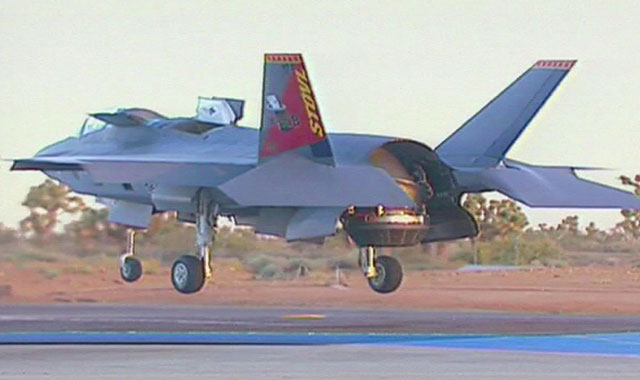
    The F35B jump-jet variant for Royal Navy aircraft carriers

The Government’s U-turn on which of the American stealth fighters to order for Britain's new aircraft carrier, the Queen Elizabeth, reveals at least it is capable of recognising a bad decision.

The issue lies in how and why the about-turn was necessary at all.
On paper, just one letter separates the two types of fighter - B and C.
They are made by the same company, Lockheed Martin, and both based on technology which makes them almost invisible to modern radar and thermal tracking systems.
But the F-35B is a short take-off vertical landing (STOVL) aircraft.
The F-35C is conventional.
The Queen Elizabeth is currently under construction in Scotland.
She was designed with a STOVL fighter in mind and built into her shape is the distinctive "ski-jump" bow which helps it to get into the air from a short run-up.
Two years ago, the STOVL was not looking good. In trials it struggled to hover anything like the more primitive Harrier jump jet and was put on "probation" by the US Government, which was developing it for the Marine Corps.
The new Government faced a £39bn black hole in its finances and, as part of a cuts programme, it announced it would mothball one of the two carriers, the Prince of Wales.
On top of that it said, rather than the F-35B jump jet it was opting for the F-35C, the "carrier variant".
It acknowledged the new Queen Elizabeth carrier would have to be adapted with catapults and stopping gear - "cats and traps" - estimating these would cost £700m, soon revising this to £900m.
The conventional F-35C has a longer combat range, 600 nautical miles compared with 469.
It can carry a bigger payload - and was lauded at the time by the Government as a better more flexible aircraft.
In 2010, Prime Minister David Cameron announced the adoption of the conventional aircraft saying: "This is another area where I believe the last government got it badly wrong.
"The carriers they ordered were unable to work effectively with our key defence partners, the United States or France.
"They ordered the more expensive and less capable version of the joint strike fighter to fly off the carriers.
"That is the legacy we inherited, an appalling legacy the British people have every right to be angry about, but I say to them today: we will act in the national interest."
He added the F-35B was "more capable, less expensive, has a longer range and carries more weapons".
In the Commons two years later, Philip Hammond, the Defence Secretary, was forced to admit that in fact the decision to abandon the jump jet fighter had to be reversed in view of "unacceptable cost growth and project delays".
Mr Hammond told Sky: "It may be inconvenient but the decision taken two years ago was based on the best information available at the time.
"Now there is much more data so we are in a position that allows us to make a more informed decision which will mean that we can have the option to have two aircraft carriers if that's what we decide to do in 2015."


Whitehall sources squirmed uncomfortably during briefings when they were asked to explain how the decision to dump the jump jet was taken given that two years later this was clearly a bad idea.
Officials estimate now that the cats and traps would cost another £1bn, and would require 290 major modifications to the ship.
Training in the use of the conventional aircraft would take longer adding to the expense.
And if the Prince of Wales was mothballed, as planned, to help pay for the adjustments to the Elizabeth, then the Elizabeth would be out of service for a third of its time on maintenance leaving the Royal Navy without an aircraft carrier for large chunk of time.
The carriers and aircraft will now be ready by 2018, not 2023, it will save £1bn in not having cats and traps, and both carriers might be useable.
So on balance, the U-turn makes sense. The question is: why was it necessary at all?

US Experts Back HIV Infection Prevention Drug

The first drug shown to help prevent HIV infection has been endorsed by a panel of US experts, paving the way for the likely approval of its use by those at high risk.

In a series of votes, a US Food and Drug Administration advisory panel recommended the daily pill Truvada be allowed to be marketed as a preventative measure against the virus that causes AIDS.
Truvada first made headlines in 2010 when government researchers showed it could prevent people from contracting HIV.
A three-year study found that daily doses cut the risk of infection in healthy gay and bisexual men by 42%, when accompanied by condoms and counselling.

Truvada needs to be taken every day, 100% of the time, and my experience as a registered nurse tells me that won't happen.
Nurse Karen Haughey

Last year another study found Truvada reduced infection by 75% in heterosexual couples where one partner was infected with HIV and the other was not.
However, the expert panel highlighted a number of concerns about the use of Truvada, including whether its use might lead to reduced use of condoms, the most reliable defence against HIV.
They also questioned the drug's effectiveness in women, who have shown much lower rates of protection in studies.
Doctors, nurses and patients have, meanwhile, expressed their concerns that people will not take the drug as recommended - every day, in addition to using condoms.

"Truvada needs to be taken every day, 100% of the time, and my experience as a registered nurse tells me that won't happen," Karen Haughey told the panel.
"In my eight years, not one patient that I've cared for has been 100% adherent."
An estimated 1.2 million Americans have HIV, which develops into Aids unless treated with antiviral drugs.
The number of new HIV infections in the US has held steady for the last 15 years at about 50,000 per year.
But with no vaccine in sight and an estimated 240,000 HIV carriers unaware they are infected, doctors and patients say new methods are needed to fight the spread of the virus.
Truvada is already marketed as a treatment for people who are infected with the virus.
It is a combination of two older HIV drugs, Emtriva and Viread. Doctors usually prescribe it as part of a drug cocktail to repress the virus.
The panel's recommendation will now be forwarded to FDA regulators, who must decide whether to give Truvada final approval. Normally they follow the panel's advice.


Bodies Found After Jet Crashes On Demo Flight

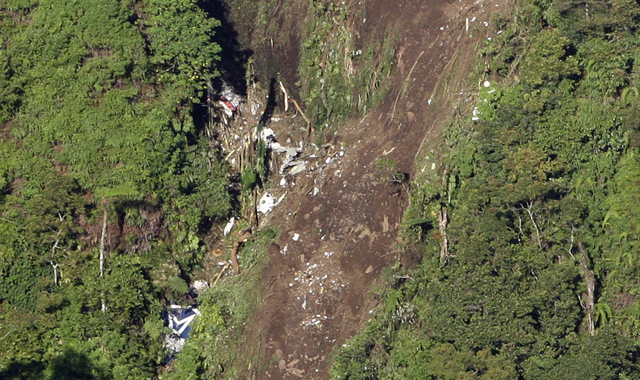
    The wreckage of the Russian aircraft is scattered on the slope of Mount Salak

Search teams have found 12 bodies after a Russian passenger jet crashed into a volcano in Indonesia during a sales demonstration flight.

The rescue teams had to use climbing equipment to scale the steep slopes of Mount Salak, a dormant volcano 5,900ft (1,800m) high, where bodies and debris from the crashed jet are scattered.

                                A forensic team examines dental records from missing passengers

The head of the national search and rescue agency said: "Today we reached the crash site... and we found 12 victims and they were all dead.
"I still don't know the condition of the bodies, but we haven't been able to evacuate them. The bodies are still in body bags."
A rescuer at the scene said: "Some of the bodies looked as if they had slammed against a hard object, but they are identifiable.
"There are no signs they were burnt."
Search teams are also looking for the plane's black boxes to reveal if the plane crash was due to mechanical failure or pilot error.
A criminal investigation was also launched in Moscow to look into possible misconduct during preparations for the flight as well as the plane's technical condition before it left Russia.
The passenger jet crashed on Thursday, killing all 45 people on board, after disappearing from radar screens just 20 minutes after take-off.
Those aboard were mostly Indonesian aviation representatives, but there were also eight Russians, four of them crew and four Sukhoi employees, plus an American and a Frenchman, officials said.
The Sukhoi Superjet 100 was on a demonstration flight for potential buyers and aviation journalists.
The Sukhoi passenger plane was Russia's first attempt at a post-Soviet civilian jet that it was hoping would compete against Boeing and Airbus.

Thursday, 10 May 2012

British' Double Agent Foiled Plane Bomb Plot

Ibrahim Hassan al Asiri is accused of making the bomb in the failed 2009 attack

The double agent who helped foil an al Qaeda plot to blow up a US-bound plane was a British national, possibly of Saudi origin, American officials have said.

UK intelligence played a central role in the operation that thwarted the plan to send a suicide attacker onto an aircraft with an underwear bomb, they added.
The undercover investigation reportedly involved MI5 and MI6, and the foiled plot ended with the explosive device being delivered to the FBI.
Its experts are examining it to see if it could have passed through security and been taken on to a plane.
The spy reportedly infiltrated a terror group in Yemen in a rare coup for Western agencies.
The individual is believed to have grown up in Europe where he was apparently radicalised.
He was subsequently "turned" and recruited by Saudi agents last year, it was claimed.
The reports were neither being confirmed nor denied in the UK.

The Obama administration had reportedly been under heavy pressure not to disclose the role of British authorities in the investigation.
US officials revealed publicly on Monday that al Qaeda in the Arabian Peninsula, known as AQAP, attempted to arm a suicide bomber with a non-metallic device.
It was an upgraded version of the failed "underwear bomb" which failed to detonate on a Detroit-bound plane on Christmas Day 2009.
US officials had said the plot was foiled by the CIA and allied foreign intelligence services, without identifying the allies.
A Department of Homeland Security official said that because the device was similar to the one in the failed 2009 attempt, security steps taken since "would have been able to prevent this device from bringing down an airplane".
Experts suggested airport body scanners, which use light doses of radiation to scan through a passenger's clothes, may have been able to detect an "anomaly" such as the device, which could then be further examined in a hands-on, pat down search.
However, the scanners have not been deployed in all airports across the US and are in very limited use elsewhere.
AQAP's master bomb-maker has previously been identified as Ibrahim Hassan al Asiri, a Saudi fugitive.
Officials believe the latest bomb could have been produced by al Asiri or one of his proteges.

Olympic Flame Burning Less Brightly In Greece

It was impossible to tell from the opening ceremony how dire the situation is for Greek athletes

The Olympic torch has been lit in Greece in a spectacular ceremony, but the country's economic troubles have led to a chronic funding crisis for its athletes.

Greece is expected to field just 75 athletes at this summer's Games, less than half the team they sent to Beijing and a sixth of the team that represented the country in Athens 2004.
Due to financial constraints the Greek Athletics Federation has been forced to cancel domestic competitions.
Athletes have to leave the country to train and compete but many can not afford to do so.
We have been forgotten and we are the nation who gave the world the Olympics. We should hold it in our hearts, but the politicians don't respect us.
Kostas Filippidis, Greek pole vaulter

Kostas Filippidis is an Olympic pole vaulter, perhaps good enough to get a medal if he could get the right training.
"The government gives me nothing. I have to ask family and friends to help me out," he said.
He trains in what was an Athens 2004 Olympics showcase facility.
However, eight years of neglect have taken itheir toll and the roof now has massive holes. Greece's top athletes have been forced to create funnels to direct rain water into huge vats.
Kostas told Sky News: "In the winter there was no heating, no hot water for a bath, when it rained water was flooding the floor. It was dangerous. It could cause an injury.
"We have been forgotten and we are the nation who gave the world the Olympics. We should hold it in our hearts, but the politicians don't respect us."


He trains in what was an Athens 2004 Olympics showcase facility.
However, eight years of neglect have taken itheir toll and the roof now has massive holes. Greece's top athletes have been forced to create funnels to direct rain water into huge vats.
Kostas told Sky News: "In the winter there was no heating, no hot water for a bath, when it rained water was flooding the floor. It was dangerous. It could cause an injury.
"We have been forgotten and we are the nation who gave the world the Olympics. We should hold it in our hearts, but the politicians don't respect us."

                 Like most people in Greece athletes have been hit hard by the economic crisis

Dimitris Kyteas, the national pole vaulting coach, hasn't been paid in a year. He is unable to even get the 1,000 euro (£800) needed to replace his threadbare crash mat cover.
His athletes train in the shadow of the 2004 Olympic stadium but he says the Greek games were a mistake.
"They asked me and I told them it was a political mistake. Where did the money go? It went into people's pockets. We got nothing. What about the athletes? Where are the athletes now? What we are doing is important, but nobody cares," he said.
He pointed to a weed-infested sandpit. "Look at the long jump... a garden."
Greece had pledged 30 million euros (£24m) to this Olympic cycle but the National Olympic Committee has only received half the funds. Some teams had to be given financial assistance by the International Olympic Committee to attend qualifying events.
The Greek Olympic Team are just more victims of the economic and political crisis which has consumed the country.
The Olympic legacy was swallowed into the same hole as Greece's other borrowings and investments. As a result the Olympic flame burns less brightly for the ancient nation who gave it to the world.